
Loading article...
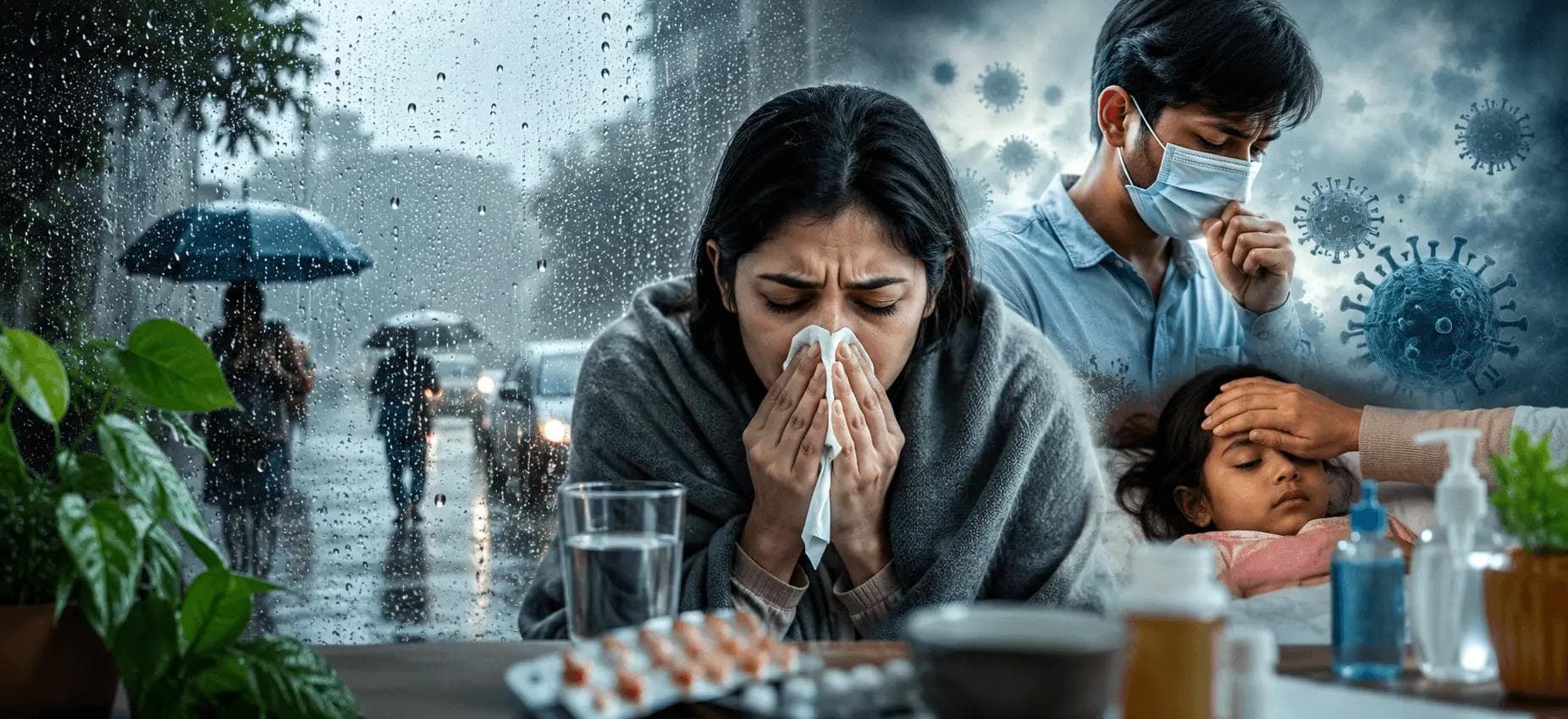
The monsoon brings welcome relief from summer heat, but it also creates ideal conditions for a surge in monsoon diseases. Waterlogged streets, contaminated water, and humidity-driven bacterial growth make the rainy season one of the most infection-prone periods of the year. In Kerala, where heavy rainfall meets backwaters and aging drainage systems, the risk is higher. Children, the elderly, and those with weak immunity face the greatest danger. Awareness and early action are your strongest defenses.
Environmental conditions during the rainy season actively favour the spread of infections. A 2022 research confirmed a strong correlation between cumulative rainfall, humidity, and the incidence of vector-borne diseases in tropical cities. The main factors are:
Several viral, bacterial, and mosquito-borne illnesses peak during the monsoon. Each has distinct symptoms, causes, and prevention measures.
Dengue fever during the monsoon is one of the most serious threats. The Aedes mosquito, which breeds in stagnant water, transmits the dengue virus. According to the National Library of Medicine, cases in India peak between July and November.
Symptoms: High fever (up to 40°C), severe headache, pain behind the eyes, joint pain, fatigue, and skin rashes appearing 3 to 4 days after the start of fever. Bleeding from gums or the nose indicates severe dengue and requires emergency care.
Prevention: Remove stagnant water weekly, use DEET-based repellents, wear full-sleeve clothing during early morning and evening, and use permethrin-treated bed nets.
Viral Fever during monsoon is often viral in origin. Viruses spread faster in monsoon conditions due to humidity, reduced immunity, and people gathering indoors, increasing droplet transmission.
Symptoms: Sudden fever (38 to 40°C), body aches, fatigue, sore throat, and nasal congestion. Most healthy adults recover within a week
Prevention: Wash hands for 20 seconds before meals and after public contact, avoid sharing utensils with unwell individuals, drink only boiled or filtered water, and keep living spaces well-ventilated.
Leptospirosis cases rise sharply every monsoon. The Leptospira bacterium, which is shed in rodent urine, survives for weeks in floodwater. Infection occurs through skin contact, especially via cuts, or by ingesting contaminated water. A study published in National Library of Medicine identified Kerala as a hyper-endemic zone with more than 1000 cases being reported annually.
Symptoms: High fever, severe calf pain, red eyes, headache, vomiting, and abdominal pain. Advanced cases progress to liver and kidney failure.
Prevention: Avoid contact with stagnant water sources. If unavoidable, wear rubber boots and waterproof gloves. High-risk workers such as agricultural labourers may be prescribed doxycycline prophylaxis by a physician.
Typhoid is caused by Salmonella typhi and spreads through contaminated food and water, making it a common waterborne disease that spikes during monsoon. Heavy rains wash contaminants into water supply systems, and street food exposed to fly contact becomes a significant route of transmission.
Symptoms: Persistent fever that rises daily, weakness, stomach pain, loss of appetite, and occasionally a rose-coloured trunk rash developing over one to three weeks.
Prevention: Drink only boiled or filtered water, avoid raw or unpeeled produce from uncertain sources, and eat food that is freshly cooked and hot. The injectable typhoid polysaccharide vaccine is advisable for those in high-risk areas.
Cold and cough during the rainy season surge due to temperature swings, people gathering indoors, and viruses surviving longer in humid air. Secondary complications like sinusitis and pneumonia are more common in children and older adults.
Symptoms: Sneezing, runny nose, sore throat, mild fever, cough, and body aches.
Prevention: Practise frequent handwashing, drink warm fluids, cover your mouth when coughing, and avoid crowded enclosed spaces. Annual influenza vaccination is recommended for healthcare workers, children under 5, and adults over 65.
Across all seasonal diseases during monsoon, the following signs require same-day medical evaluation:
These monsoon health tips work well when combined together. No single step is enough on its own.
Seek medical care without delay if any of the following apply:
Do not self-medicate with antibiotics for more than 48 hours without guidance. Always inform your physician of any recent exposure, as this significantly narrows the differential diagnosis for dengue, leptospirosis, and typhoid.
A well-equipped multispeciality hospital offers coordinated diagnostics, specialist consultations, and inpatient care under one roof. Blood tests including a dengue NS1 antigen panel, leptospira IgM ELISA, and renal and liver function panels help distinguish between overlapping monsoon conditions quickly. Dengue patients receive serial platelet monitoring every 12 to 24 hours, while severe cases are managed with IV fluids, supplemental oxygen, and ICU-level observation as needed.
SP Fort Hospital in Kerala, runs dedicated fever clinics with rapid diagnostic pathways during the monsoon. Supported by departments spanning internal medicine, infectious disease, nephrology, and intensive care, the hospital is equipped to manage the full spectrum of monsoon diseases in Kerala from initial outpatient assessment to complex inpatient care. Early presentation means better outcomes, and that is what the team at SP Fort is structured to deliver.
Monsoon diseases are largely preventable. Consistent hygiene, safe water practices, mosquito control, and a diet that supports immune health go a long way toward keeping your family safe through the rainy season. Recognise the warning signs early, act without delay, and do not underestimate symptoms that persist beyond 48 hours.
If fever, severe body pain, or any of the signs listed above appear, contact SP Fort Hospital for expert evaluation. Prompt diagnosis is the single greatest advantage you can give yourself this season.


