

Loading article...
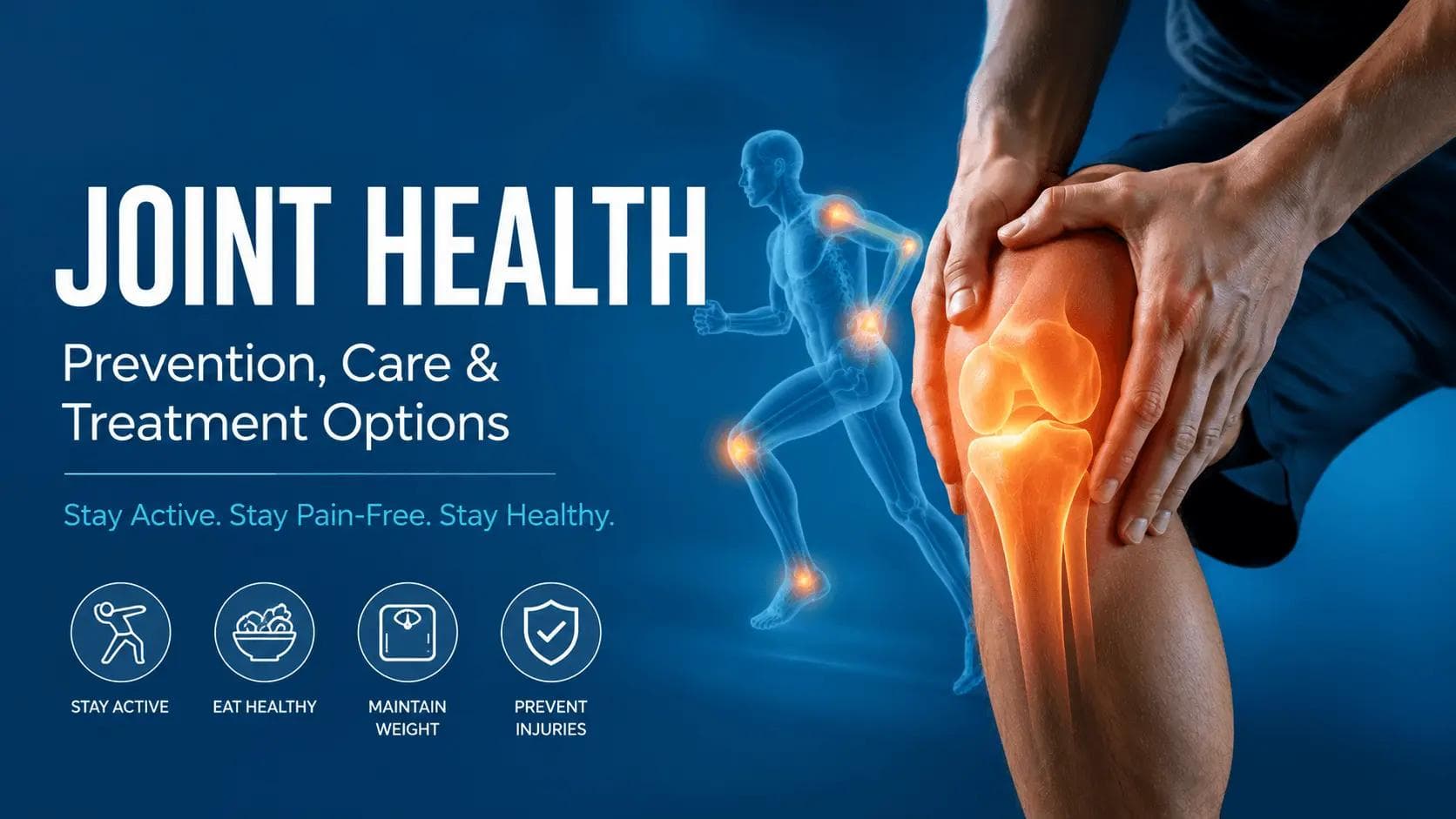
Every step, stair climb, and reach depends on your joints working quietly in the background. When they work well, you barely notice them. When they do not, even small daily tasks become difficult.
Joint health tends to decline with age, but the process is shaped heavily by weight, activity level, diet, posture, and old injuries. The most common causes of joint pain include wear-related osteoarthritis, autoimmune rheumatoid arthritis, gout, overuse injuries such as tendinitis, and acute trauma like ligament tears.
This guide covers joint anatomy, common problems, diagnosis, and prevention and treatment options.
Joint health is the ability of a joint to move smoothly, bear weight, and support daily activity without pain, stiffness, or instability. A healthy joint is made up of several working parts:
When any one part deteriorates, the whole system is affected, often resulting in pain or reduced mobility.
The body has fibrous joints (largely immovable, as in the skull), cartilaginous joints (slightly movable, as between vertebrae), and synovial joints (freely movable, including knees, hips, and shoulders). Synovial joints, being weight-bearing and constantly in motion, are the ones most often affected by injury and degenerative disease.
Healthy joints support comfortable movement, balance, physical activity, independence, and healthy aging. Left untreated, joint problems bring chronic pain, reduced mobility, lost productivity, and lower quality of life.
The scale is significant: an estimated 607 million people worldwide had osteoarthritis in 2021, up roughly 137 percent since 1990, while global rheumatoid arthritis cases are projected to reach nearly 32 million by 2050.
Musculoskeletal disorders are now the largest global contributor to years lived with disability, and Indian population surveys find joint pain in over 40 percent of older adults, with knee osteoarthritis the most common site-specific condition nationally.
Joint problems range from gradual wear to sudden injury. The table below summarises the most frequent conditions.
Osteoarthritis and rheumatoid arthritis are often confused. Osteoarthritis is mechanical wear that typically affects one side and eases stiffness within 30 minutes, while rheumatoid arthritis is autoimmune, symmetrical, and carries systemic symptoms like fatigue and fever.
Watch for persistent pain, swelling, morning stiffness, warmth, clicking or grinding, reduced range of motion, weakness, instability, joint locking, or difficulty walking. Symptoms may build gradually or appear suddenly, and persistent or worsening signs should not be ignored.
Risk increases with aging, excess body weight, repetitive movement, sports injury, poor posture, a sedentary lifestyle, smoking, family history, autoimmune disease, nutritional deficiencies, and previous joint injury. These factors often compound rather than act alone.
Diagnosis typically combines a medical history and physical exam with imaging (X-ray, MRI, CT, or ultrasound), blood tests for inflammatory markers, joint aspiration when infection or gout is suspected, and arthroscopy in select cases. Early diagnosis leads to better outcomes and more treatment options.
Low-impact activities such as walking, swimming, cycling, yoga, stretching, resistance training, and balance work improve flexibility and strength while limiting joint stress. Start gradually and consult a professional before beginning a new routine if joint pain is severe.
Seek evaluation for pain lasting more than two weeks, severe swelling, joint deformity, difficulty walking, fever with joint pain, recurrent instability, a sports injury, or pain that persists despite home care. Early consultation preserves more treatment options.
If you have persistent joint pain, stiffness, or reduced mobility, consult an orthopaedic specialist at SP Fort. Timely diagnosis and a personalized treatment plan can help preserve joint function and quality of life.
For comprehensive care and advanced treatment options, SP Fort Hospital offers the Best Orthopaedic Treatment in Kerala, with care tailored to individual patient needs.
What is the most common cause of joint pain?
Osteoarthritis, from gradual cartilage breakdown, particularly after age 45.
Can joint damage be reversed?
Cartilage rarely regenerates fully, but progression can be slowed and function improved through weight control, exercise, and treatment.
Is walking good for joint pain?
Yes, for most people. It strengthens supporting muscles without high impact, though severe pain during walking should be evaluated.
When is joint replacement necessary?
When pain severely limits daily activity, imaging shows advanced damage, and conservative treatment has not helped.
Can young people get arthritis?
Yes. Rheumatoid arthritis, gout, and post-traumatic arthritis can affect people well before middle age.
Does weather affect joint pain?
Many people report more pain in cold or damp weather, possibly linked to barometric pressure changes affecting joint tissue.


