

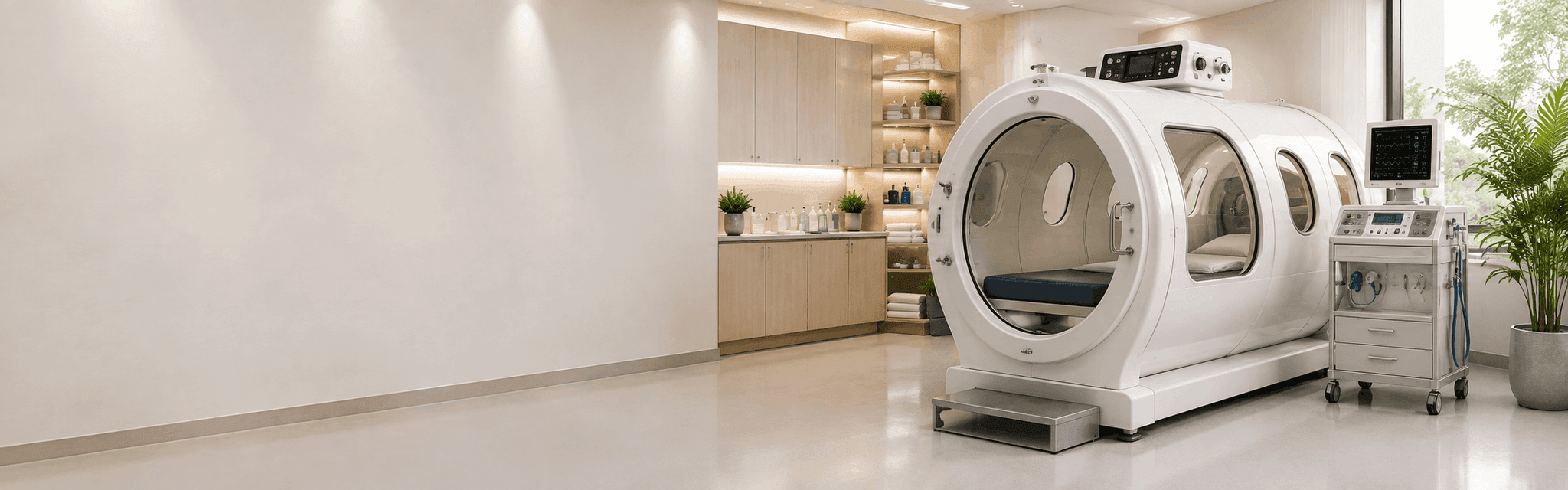
Best Hyperbaric Medicine Hospital in South India
Pressurised Oxygen, Expert Wound Care and Diabetes Control Delivered as One Programme
Chronic wounds do not belong to a single specialty, and that is exactly why so many of them fail to heal. The dressing is done by one clinic, the diabetes is managed by another, the circulation is never formally assessed, and nobody owns the outcome. SP Fort Hospital, Trivandrum, was built around removing that fragmentation. Hyperbaric physicians, diabetologists, wound care nurses, and surgical colleagues review each patient together and commit to a single written plan.
Patients arrive here from across Kerala, Tamil Nadu, and Karnataka, which is why we function as a hyperbaric oxygen therapy center South India clinicians rely on for their most difficult referrals. If you are comparing options for the best hyperbaric oxygen therapy in South India, the question worth asking is not whether a hospital owns a chamber. It is whether the debridement, the vascular assessment, the offloading, and the glucose control are happening in the same place at the same time.
What Happens to a Wound That Has Been Open for Months
Normal healing moves through defined stages. Inflammation clears the debris, new tissue is laid down, and the wound remodels and closes. A chronic wound gets stuck in the first stage and stays there. Inflammatory chemicals accumulate, the cells that should be rebuilding become exhausted and stop dividing, and bacteria organise themselves into a protective layer across the wound bed. At that point the wound is no longer simply healing slowly. It is running a different and self-sustaining process. Breaking that cycle needs more than another dressing. Hyperbaric oxygen therapy in South India at our department raises the oxygen dissolved in your plasma many times over, and oxygen at those levels is what allows immune cells to kill bacteria efficiently, stimulates new capillary formation, and reactivates the repair machinery that had stalled. Delivered as a structured course, hyperbaric treatment South India patients receive here restarts a process that had genuinely stopped rather than merely slowed.
Why Antibiotics Alone Keep Failing
Bacteria in a long-standing wound form a biofilm, a dense protective layer that antibiotics struggle to penetrate and the immune system cannot easily clear. This is why courses of tablets produce temporary improvement and then relapse. Effective treatment for non healing wounds South India patients need combines physical removal of that layer through debridement with the oxygen levels immune cells require to finish the job.
A Threatened Limb Is a Time-Critical Problem
Once infection reaches bone or circulation falls below the level needed for repair, the window for saving a limb narrows quickly. Genuine treatment to avoid leg amputation South India families are searching for depends less on any single technology than on speed, assessing blood supply within days rather than weeks and acting on deep infection immediately.
How Our Programme Is Organised, and Why It Works
The difference between a chamber and a programme becomes obvious within the first consultation. As a hyperbaric oxygen therapy hospital in South India taking referrals from three states, we have had to build a system that does not depend on any one clinician being available on any one day.
Referrals Accepted From Across the Region
Patients and treating doctors from outside Kerala can send reports ahead so the first visit is an assessment rather than a paperwork exercise. Investigations are grouped to reduce the number of journeys.
Selection Testing Before Sessions Are Booked
We measure skin oxygen around the wound to establish whether hyperbaric therapy can help you specifically. Offering the best HBOT treatment in South India means declining to sell sessions to patients they will not benefit.
A Written Plan With Expected Timelines
You leave the first consultation knowing the number of sessions anticipated, what improvement should be visible by which week, and what happens if it is not. Vague plans are how months get lost.
Surgery, Angiography and the Chamber in One Institution (in collab with S P Medifort)
Debridement, revascularisation, and hyperbaric sessions are arranged internally within days. Patients treated at the best hospital for wound healing in South India should never be waiting on an appointment somewhere else while tissue deteriorates.
The Metabolic Cause Treated in Parallel
Diabetologists join the same review as the wound team from the first visit. Glucose control, nutrition, anaemia, and protein status are corrected while the wound is being treated, not afterwards.
Nurse-Led Continuity Between Visits
The same wound care nurses follow you throughout, which means changes in the wound bed are noticed by people who saw it last week. Continuity catches deterioration earlier than any protocol.
Prevention as a Formal Part of Treatment
Roughly four in ten healed diabetic ulcers recur within a year without structured follow-up. Our advanced wound care center South India programme therefore treats footwear, inspection habits, and review scheduling as clinical care rather than advice on discharge.
Conditions Managed by Our Hyperbaric and Wound Care Department
Below are the conditions we treat, with the reasoning behind the approach in each case. Hyperbaric oxygen is used where evidence supports it and omitted where it does not.
Diabetic Foot Ulcers
Nerve damage removes the pain that would have prompted early attention, so these wounds are often advanced when first seen. Our treatment for diabetic foot South India pathway confirms arterial supply first, then combines debridement, total contact casting, targeted antibiotics, and hyperbaric sessions.
Wounds That Have Not Healed in Six Weeks
Time alone is diagnostic. Non healing wound treatment in South India here begins by questioning the original diagnosis, since a venous ulcer treated as arterial, or an unrecognised bone infection, will not respond to any dressing.
Foot Ulcers of Every Type
Neuropathic, venous, arterial, and pressure ulcers demand opposite management, and compression that heals one can destroy another. Treatment for foot ulcer South India patients receive begins with correct classification and pulse assessment.
Diabetic Ulcers Beyond the Foot
Heels, ankles, shins, and sacral pressure areas are frequently involved, particularly in patients with reduced mobility. Treatment for diabetic ulcers South India applies the same principles of pressure relief, debridement, and glycaemic control at each site.
Burns and Donor Sites
Swelling after a deep burn compresses the very vessels the tissue depends on, deepening the injury over the following days. Our burn treatment in South India service manages that phase closely, alongside pain, infection, and graft and donor site healing.
Preventive Diabetic Foot Surveillance
Thickened callus, deformed nails, dry cracked skin, and pressure marks all precede ulceration. Diabetic wound care in South India at SP Fort includes routine review and minor intervention while the skin is still intact.
Wound Dehiscence and Failing Flaps
A surgical wound that reopens or a flap that turns dusky is usually short of oxygen at the margins. Prompt hyperbaric sessions can preserve tissue and avoid a second operation.
Delayed Radiation Injury
Radiotherapy leaves some tissue permanently under-vascularised, and breakdown can appear many years later. Promoting new vessel growth in these beds is among the best-evidenced uses of hyperbaric oxygen.
Necrotising Soft Tissue Infection
These infections advance along tissue planes faster than antibiotics can contain them. Urgent surgery leads, with hyperbaric oxygen as an adjunct that limits tissue loss at the edges.
Refractory Bone Infection
Chronic osteomyelitis recurs because infected bone is poorly perfused and drug levels there stay low. Raising tissue oxygen improves both antibiotic activity and immune cell function.
The Systemic Factors Behind Poor Healing
Low protein, anaemia, vitamin deficiency, and smoking each suppress repair regardless of local care. Our wound healing treatment in South India identifies and corrects these, because no dressing compensates for a body without building materials.
Diabetes, Thyroid and Metabolic Medicine Within the Same Department
Almost every chronic wound we treat has a metabolic condition behind it, so these clinics are part of the department rather than a referral made later.
Type 1 and Type 2 Diabetes
Pump clinics, sensor-based monitoring, and structured education support control that survives outside the hospital. Diabetic treatment in South India here is designed around your work, meals, and daily routine rather than issued as a standard prescription.
Uncontrolled Glucose and New Diagnoses
Sustained high readings damage nerves and small vessels silently, which is how ulcers begin. Our high blood sugar treatment South India protocol lowers glucose safely while identifying what allowed it to rise.
Diabetes in Pregnancy
Gestational diabetes is managed jointly with obstetrics using tight targets, frequent review, and postnatal follow-up, since the risk of later diabetes remains elevated.
Thyroid Disease
Persistent fatigue, weight change, palpitations, or a neck swelling all deserve proper testing rather than assumption. Treatment for thyroid problem South India patients need starts with hormone panels and imaging before treatment is decided.
Overactive Thyroid
Left untreated, hyperthyroidism strains the heart, weakens bone, and disturbs sleep and mood. Our hyperthyroidism treatment South India service covers medication and monitoring, with timely referral where radioiodine or surgery is the better option.
Metabolic Syndrome, Obesity and PCOS
Insulin resistance, abnormal lipids, and weight rarely respond to advice alone. Metabolic disorder treatment South India here includes dietetic planning, supervised activity, and psychological support as standard components.
Screening for Diabetes Complications
Feet, kidneys, eyes, nerves, and sexual health are reviewed on a schedule rather than when symptoms appear. Early detection is what preserves function across decades.
What We Measure, and What We Use to Treat
Every decision in this department rests on a measurement rather than an impression. That is what allows oxygen therapy treatment South India patients undergo here to be prescribed for a reason, delivered to protocol, and stopped when the numbers say it is not working.
Hyperbaric Chamber
Pure oxygen at controlled pressure, supervised throughout by trained staff. Every session of oxygen chamber therapy in South India is recorded against your prescribed pressure and duration so the full course can be reviewed.
Transcutaneous Oxygen Measurement
Reading oxygen levels in the skin bordering the wound predicts response before a course begins. It is the difference between prescribing therapy and hoping it helps.
Doppler Studies and Ankle-Brachial Index
These establish whether enough arterial blood is reaching the limb to heal anything at all. Where it is not, restoring flow takes priority over every other intervention.
Negative Pressure Wound Therapy
Vacuum-assisted closure removes exudate, controls swelling, and draws wound edges inward. It is especially valuable in deep cavities and after extensive surgical debridement.
Advanced Dressing Systems
Foams, alginates, hydrocolloids, and antimicrobial dressings are selected by wound stage and exudate volume, then changed as the wound bed itself changes.
Continuous Glucose Monitoring and Pumps
Sensor data exposes the overnight and post-meal excursions that intermittent testing misses entirely. Improved control translates measurably into faster closure.
Offloading, Casting and Prescription Footwear
Total contact casts, walkers, and custom insoles are assessed and fitted in-house. Pressure relief only works when the device is correct, comfortable, and consistently used.
On-Site Laboratory, Imaging and Theatres
Wound cultures, HbA1c, inflammatory markers, X-ray, MRI, and surgical debridement are all available within the same building and usually the same week.
The Clinicians Behind Your Treatment

Consultant - Diabetologist
MBBS,MD, MRCP (UK), FRCP (Edin), FRCP (Glas)

Your Treatment Pathway, Stage by Stage
For patients travelling some distance, knowing how the pathway is structured makes it far easier to plan. This is how it runs.
1. Sending Records and Booking
Call the front desk or use the online form, and send previous reports ahead where possible. Bring culture results, imaging, dressing history, recent glucose readings, and a full medication list.
2. Assessment and Investigation
The wound is measured, photographed, probed, and swabbed on the first visit. Circulation, sensation, infection markers, glycaemic control, and nutritional status are all established together.
3. The Multidisciplinary Decision
Your hyperbaric physician, diabetologist, and wound care nurse agree the plan jointly, then explain what is proposed, what it should achieve, and by when you should see it.
4. Treatment in Parallel
Hyperbaric sessions run to schedule while debridement, dressings, casting, antibiotics, and glucose management proceed alongside. Measurements at fixed intervals govern any change of course.
5. Closure and Long-Term Protection
Once healed, footwear is fitted, daily inspection is taught, diabetes targets are reset, and review appointments are booked. Preventing the next wound is the final stage of treating this one.
Frequently Asked Questions
Tell us at booking and we will group your investigations into as few visits as possible and schedule sessions on consecutive days. Many patients arrange short-term accommodation nearby for the intensive phase, and our team can advise on options close to the hospital.
Contact Our Hyperbaric and Wound Care Team
Clinics run through the week, and our hyperbaric treatment center South India team accepts referrals for threatened limbs. Reach us through any of the following: