

Loading article...
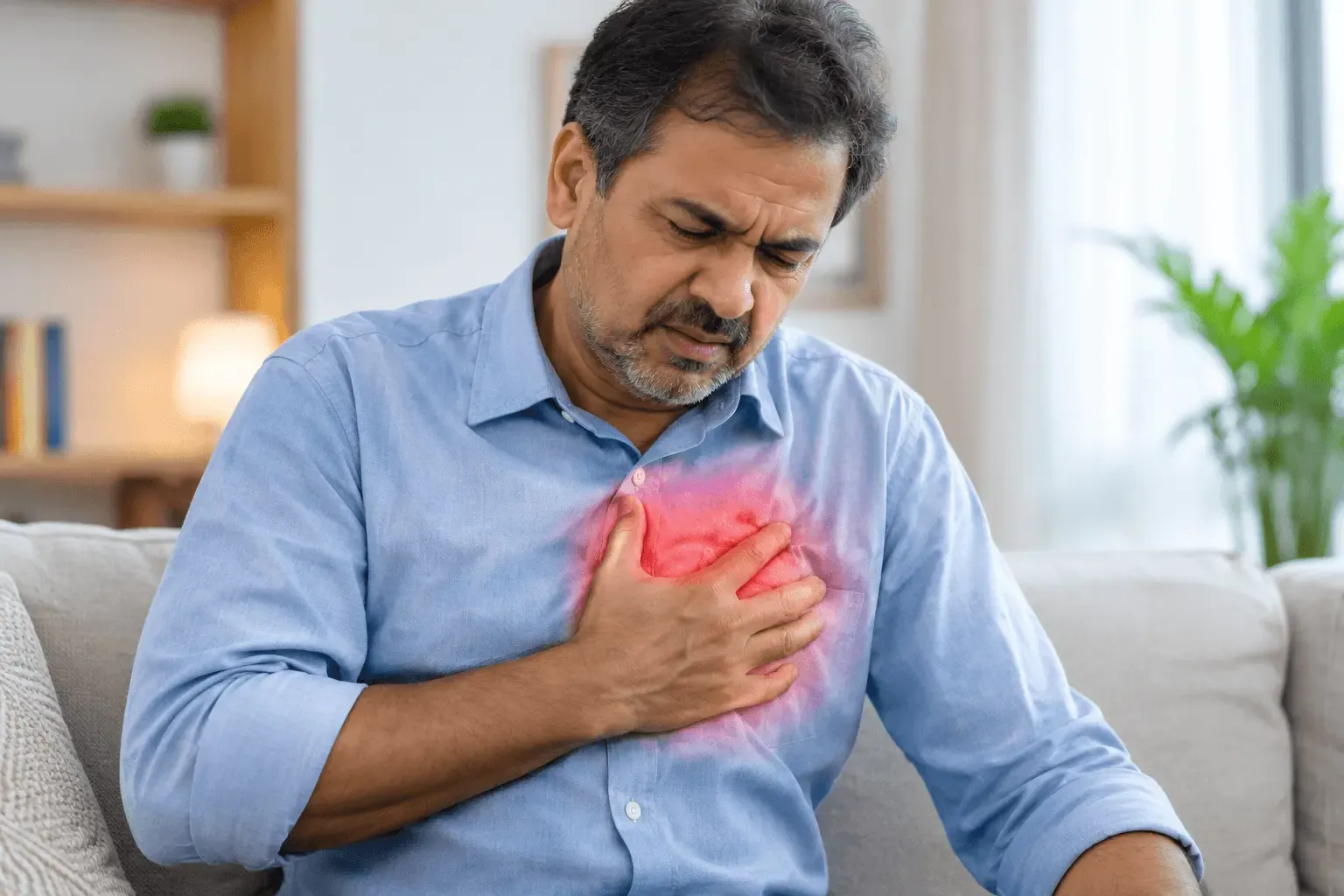
A heart attack rarely happens without any warning at all. In most cases, the body sends out signals days, weeks or even months before the actual event, but these signals are often mild, easy to dismiss, or mistaken for something less serious like fatigue or indigestion. Recognizing heart attack warning signs early can mean the difference between reaching the hospital in time and suffering permanent heart damage.
This guide covers the most important symptoms before a heart attack, how they can differ between men and women, and exactly when to seek emergency care.
A heart attack, medically known as a myocardial infarction, occurs when blood flow to part of the heart muscle is blocked, usually by a buildup of fat, cholesterol and other substances forming a clot inside a coronary artery. Without oxygen rich blood, the affected heart muscle begins to die within minutes, which is why fast recognition and treatment matter so much.
Classic heart attack symptoms are widely recognised, but they do not always appear the same way in every person.
A large-scale review of patients admitted with confirmed heart attacks found that chest pain, chest heaviness and palpitations were the most frequently reported early symptoms, appearing well before the main event in a significant share of cases.
Symptoms before a heart attack often begin subtly and build up gradually rather than striking all at once. These early or prodromal symptoms can appear days, weeks or even a month before the actual cardiac event, which makes them easy to overlook.
Research tracking heart attack survivors found that close to 95 per cent reported experiencing early warning symptoms in the weeks or months before their event, yet many did not connect these signs to their heart until after the attack occurred.
Men are more likely to experience the textbook presentation of a heart attack, which is part of why it has long been considered the standard pattern.
Heart attack symptoms in women often look noticeably different, which contributes to delayed diagnosis and treatment. A landmark study of women who had experienced a heart attack found that only about 30 percent reported chest discomfort as a symptom, while unusual fatigue, sleep disturbance and shortness of breath were far more common.
Because these symptoms overlap with common, less serious conditions, women are more likely to have their heart attack symptoms misattributed to other causes, which can delay life-saving treatment.
A silent heart attack causes the same underlying damage as a typical heart attack but with symptoms mild enough to go unnoticed or be mistaken for something minor. It may present as brief chest discomfort mistaken for muscle strain, mild fatigue dismissed as a poor night's sleep, or indigestion assumed to be from a heavy meal. Silent heart attacks are often only discovered later during routine testing, which is why unexplained or recurring mild symptoms should never be brushed aside entirely.
Understanding what leads to a heart attack helps explain why certain symptoms appear and who is at greater risk.
Some symptoms should never wait for a scheduled appointment. If they appear suddenly or intensify quickly, they call for emergency care right away.
Doctors consistently advise against waiting to see if symptoms improve on their own. As one researcher who studies pre-heart attack symptoms in women put it, women often delay care and end up experiencing the event at home rather than in a hospital where timely treatment is available. Calling emergency services immediately gives the best chance of minimising heart damage.
During an active heart attack, symptoms tend to be more intense and persistent than earlier warning signs. Pain or pressure in the chest that does not ease with rest, breathlessness that worsens quickly, and a combination of sweating, nausea and weakness are strong indicators that emergency treatment is needed immediately, not after waiting to see if the feeling passes.
Heart attacks rarely occur without warning, but the signs are not always obvious, especially in women, where fatigue, breathlessness and back or jaw pain can replace the classic chest pain most people expect. Knowing the full range of heart attack symptoms, from early prodromal signs to full-blown emergency symptoms, gives you the best chance of acting quickly and protecting your heart.
If you or someone close to you has been experiencing unexplained fatigue, chest discomfort, breathlessness or any of the warning signs discussed above, do not wait to have it checked. Reach out to the cardiology team at SP Fort Hospital for a thorough heart health evaluation and timely, expert care when it matters most.
For expert cardiac care, choose the best cardiology hospital in Kerala for timely diagnosis and treatment.
What are the early signs of a heart attack?
Early signs often include unusual fatigue, trouble sleeping, mild shortness of breath, indigestion, and a general feeling that something is wrong, sometimes appearing days or weeks before the actual event.
How do heart attack symptoms differ in women?
Women are more likely to experience fatigue, shortness of breath, nausea, and back or jaw pain rather than the intense chest pain commonly seen in men.
What is a silent heart attack?
A silent heart attack causes real heart damage but with mild or unnoticed symptoms, often only discovered later through routine medical testing.
When should I seek emergency care for a heart attack?
Seek emergency care immediately for severe chest pain or pressure, breathlessness, cold sweat, nausea, or pain spreading to the arm, jaw or back, especially if symptoms are sudden or worsening.
Can a heart attack happen without chest pain?
Yes, particularly in women, a heart attack can occur with minimal or no chest pain, presenting instead as fatigue, breathlessness or discomfort in other parts of the upper body.
What should I do if I notice early warning signs of a heart attack?
Do not ignore persistent or unusual symptoms. Seek prompt medical evaluation, and call emergency services immediately if symptoms are severe or appear suddenly.

