

Loading article...
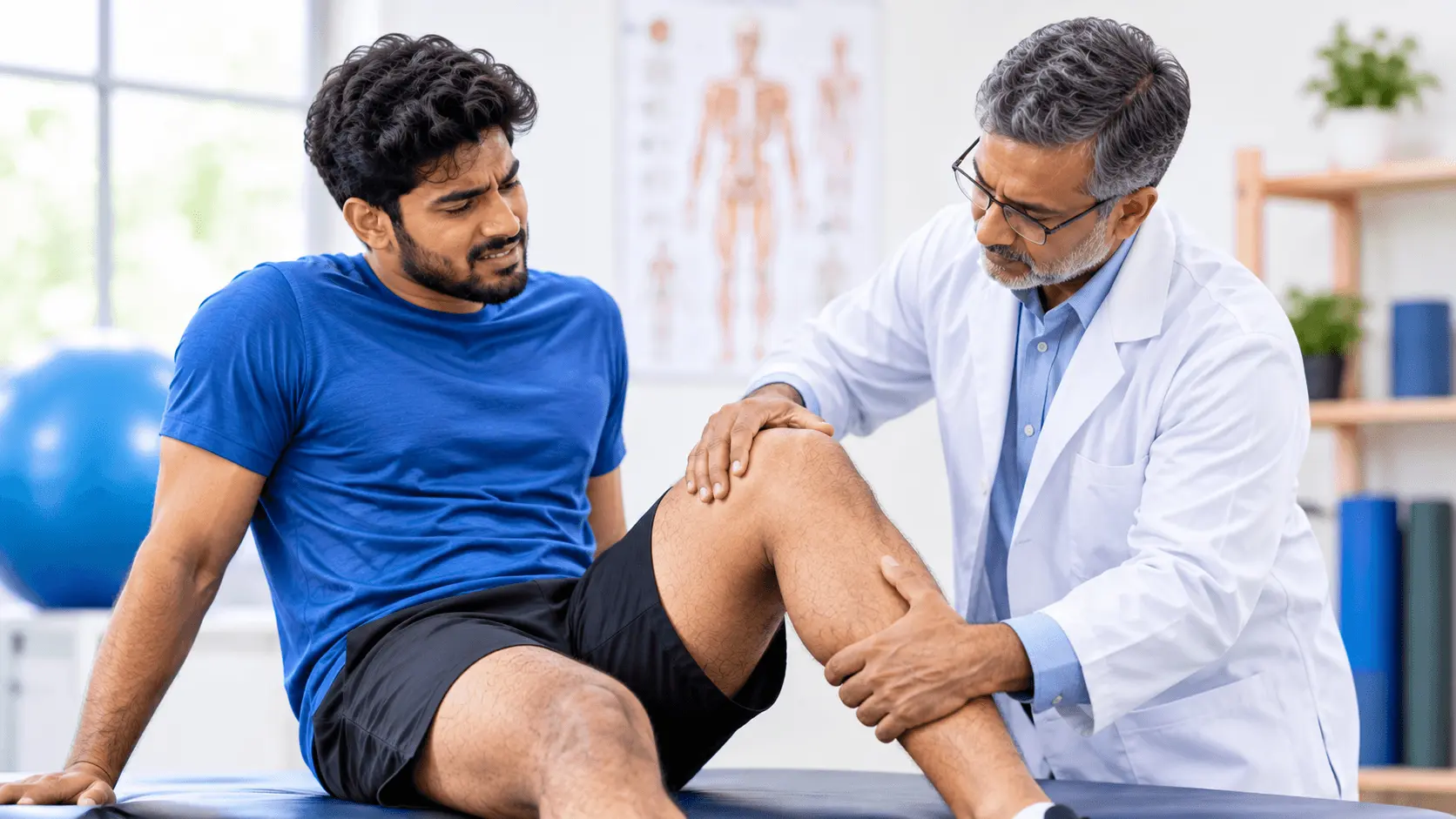
Getting injured during sport or exercise is frustrating, but how that injury is managed in the first few days and weeks often determines how quickly, and how fully, an athlete returns to their sport. Many people try to push through pain or wait for an injury to heal on its own, only to find the problem lingers or returns once activity resumes.
Sports injury rehabilitation, guided by a qualified physiotherapist, is designed to do more than simply reduce pain. It restores strength, mobility and confidence while lowering the risk of reinjury. This guide explains common sports injuries, what effective rehabilitation looks like, and exactly when it is time to see a physiotherapist.
Sports injury rehabilitation is a structured process that helps an injured athlete recover function, strength and movement patterns in a safe, progressive way. Rather than simply waiting for pain to subside, physiotherapy for sports injuries focuses on restoring the body to, or beyond, its pre-injury level of performance.
A broad review of injury rehabilitation research highlights that sports injury rehabilitation should be sports and condition specific, address muscle and functional performance, and account for joint health, rather than relying on a generic recovery plan for every type of injury.
Athletes and active individuals are prone to a range of injuries, many of which respond well to timely physiotherapy.
Physiotherapy for athletes is not just about pain relief. It addresses the underlying mechanical and functional issues that caused the injury in the first place, while also preparing the body to handle the demands of returning to sport.
Research on return to sport outcomes consistently shows that structured, supervised rehabilitation produces better long term results than simply resting and waiting. One study following professional footballers found that a structured on-field rehabilitation framework significantly reduced recovery time and supported safer reintegration into team training compared to standard recovery approaches alone.
Muscle strains, especially in the hamstrings and calves, are common across almost every sport that involves running or sudden acceleration. Early, progressive loading has been shown to meaningfully speed up recovery. A review of hamstring injury rehabilitation found that athletes who began rehabilitation just two days after injury returned to sport in about 63 days, compared to 83 days for those who started nine days after injury, highlighting how timing and approach directly affect recovery speed.
Muscle injury rehabilitation typically progresses through several phases.
Ligament injuries, particularly to the knee and ankle, often require a longer and more structured rehabilitation process due to the joint stability involved. Anterior cruciate ligament rehabilitation is a widely studied example, with supervised, physiotherapist guided programs generally producing more consistent outcomes than unsupervised recovery. A pilot study comparing rehabilitation approaches after ACL reconstruction found that re-injury rates were similar between supervised and home based rehabilitation groups, though supervised programs allowed for closer monitoring of strength asymmetries and readiness markers throughout recovery.
Joint injury rehabilitation generally focuses on the following areas.
Psychological readiness plays a meaningful role in this process as well. Qualitative research involving physiotherapists treating ACL injuries found that recovery is not just about the knee itself, with fear of reinjury and confidence significantly affecting return to sport outcomes, which is why a good rehabilitation program addresses mindset alongside physical healing.
Sprains, which affect ligaments, and strains, which affect muscles or tendons, are among the most common sports injuries treated by physiotherapists. Early rehabilitation typically follows a protected movement approach rather than complete rest, since some controlled movement helps guide healing tissue and prevent stiffness. A physiotherapist will usually assess the grade of the sprain or strain before designing a rehabilitation timeline, since more severe injuries require a longer, more cautious progression back to activity.
While a physiotherapist tailors exercises to the specific injury, several categories of exercises are commonly used throughout sports injury recovery.
Not every ache requires professional care, but certain signs point clearly to the need for a physiotherapy evaluation.
A physiotherapist typically begins with a detailed assessment of the injury, including how it happened, current pain levels, strength, flexibility and movement patterns. From there, a personalised rehabilitation plan is developed, often combining manual therapy, targeted exercises and gradual loading. Regular reassessment allows the physiotherapist to adjust the program as healing progresses, ensuring the athlete moves through recovery at a safe but efficient pace rather than following a fixed, generic timeline.
Returning to sport too early is one of the most common reasons for reinjury. A thorough rehabilitation program typically includes specific benchmarks, such as restored strength symmetry between limbs, full range of motion, and confidence in sport specific movements, before clearing an athlete to return. Editorial research on return to sport practices emphasizes that recurrent injuries are not inevitable, and a holistic approach combining physical, psychological and social factors alongside evidence based physiotherapy reduces long term reinjury risk.
Physiotherapy is not only useful after an injury occurs. Many athletes work with a physiotherapist proactively to address movement imbalances, muscle weakness or poor technique that could lead to future injury. Regular strength training, proper warm up routines, adequate recovery time between intense training sessions, and correcting biomechanical issues identified during a physiotherapy assessment all play a role in reducing injury risk over the long term.
At SP Fort Hospital, the physiotherapy team works closely with athletes and active individuals to design rehabilitation programs tailored to the specific injury, sport and performance goals of each patient.
Sports injury rehabilitation is far more effective when it is structured, progressive and guided by a qualified physiotherapist rather than left to guesswork or prolonged rest alone. From muscle strains to ligament tears, the right rehabilitation plan not only speeds up recovery but significantly lowers the risk of reinjury once you return to your sport.
If you are dealing with a sports injury that is not improving, or you want guidance on a safe return to activity, do not wait to get it evaluated. Book a consultation with the physiotherapy specialists at SP Fort Hospital for a personalised recovery plan built around your injury and your goals.
When should I see a physiotherapist for a sports injury?
See a physiotherapist if pain persists or worsens after a few days, if there is swelling or instability, or if the injury keeps recurring each time you return to activity.
What does sports injury rehabilitation involve?
It typically involves a detailed assessment followed by a progressive plan combining manual therapy, targeted exercises, strength training and sport specific drills tailored to the injury.
How long does sports injury recovery take?
Recovery time varies widely depending on the type and severity of injury, ranging from a few weeks for mild strains to several months for significant ligament or joint injuries.
Can physiotherapy help prevent sports injuries?
Yes, physiotherapists can identify movement imbalances and weaknesses before they lead to injury, and design preventive strength and conditioning programs for athletes.
What are common sports injury recovery exercises?
Common exercises include range of motion work, isometric and progressive strengthening, balance and proprioception drills, and sport specific movement training.
Is it safe to return to sport without physiotherapy guidance?
Returning to sport too early or without proper guidance significantly increases the risk of reinjury, which is why a structured, supervised rehabilitation plan is strongly recommended.

