

Loading article...
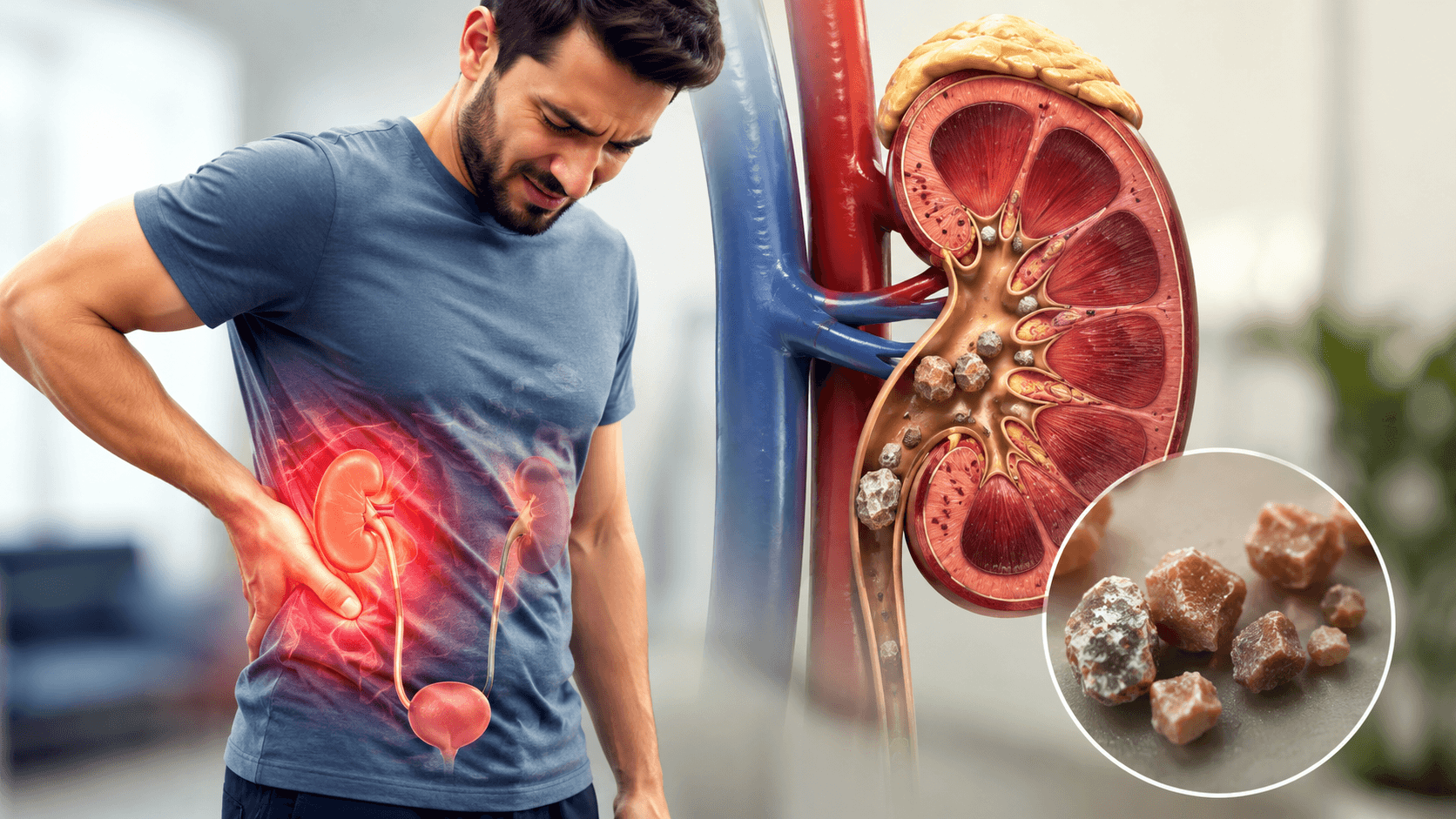
A kidney stone is a hard, pebble like mass that forms when minerals and salts in urine crystallize inside the kidney. It is one of the most common urological problems worldwide, and the pain that comes with a stone moving through the urinary tract is often described as among the worst a person can experience.
Kidney stones affect every age group, and cases are rising steadily across the globe, driven partly by diet, climate, and lifestyle. Early diagnosis matters because a stone caught early is easier to treat and less likely to cause lasting kidney damage. This guide covers what kidney stones are, why they form, their types, symptoms, causes, risk factors, diagnosis, treatment, recovery, diet, prevention, complications, and when to see a urologist.
A kidney stone is a solid mass of crystallized minerals that builds up inside the kidney when urine holds too little fluid or too much dissolved mineral. Stones may stay in the kidney without causing problems, or move into the ureter, the narrow tube connecting kidney to bladder, which is what usually triggers pain.
Stones vary from a grain of sand to a golf ball, and a person can have one or several at once. Most people feel nothing while a stone sits still; symptoms typically begin once it shifts position.
Stone formation follows a fairly predictable sequence.
Low water intake, high mineral concentration, and reduced urine volume all accelerate this process.
Identifying stone type is one of the most important factors a urologist uses to plan treatment and prevention.
The most common type, formed when calcium binds with oxalate. Risk factors include low fluid intake, high sodium diets, and oxalate rich foods such as spinach, beets, nuts, and chocolate.
Form when calcium combines with phosphate rather than oxalate, often linked to renal tubular acidosis or overactive parathyroid glands, and encouraged by more alkaline urine.
Develop when urine is persistently acidic and uric acid is high, commonly tied to high protein diets and gout.
Linked to urinary tract infections caused by urease producing bacteria, these can grow rapidly and often need urgent treatment.
A rare, genetic disorder called cystinuria that causes recurrent stones and needs long term management.
| Stone Type | Primary Cause | Common Risk Factors |
| Calcium Oxalate | Calcium binds with oxalate | Low fluid intake, high oxalate diet |
| Calcium Phosphate | Calcium binds with phosphate | Renal tubular acidosis, overactive parathyroid |
| Uric Acid | High uric acid, acidic urine | High protein diet, gout, obesity |
| Struvite | Urinary tract infection | Recurrent UTIs, urease producing bacteria |
| Cystine | Genetic disorder (cystinuria) | Family history |
Severe pain, high fever, persistent vomiting, or an inability to urinate all call for immediate medical care.
Age (most common between 30 and 60), gender, genetics, and climate all play a role, since hot, dry regions cause more fluid loss through sweat. Sedentary habits and poor hydration compound risk over time, and anyone who has already had one stone faces a notably higher chance of another, which makes prevention especially important after a first episode.
Treatment depends on the stone's size, location, symptoms, and type.
Home management may take one to four weeks for a stone to pass. Minimally invasive procedures usually allow normal activity within days, while PCNL and open surgery need one to several weeks. Staying hydrated helps flush remaining fragments, light activity is encouraged, and strenuous exercise should wait until cleared by the treating urologist. Follow up visits confirm the kidney is clear and flag factors that could lead to a future stone.
Diet plays one of the largest roles in both forming and preventing stones, and dietary studies on calcium and oxalate continue to guide how urologists counsel patients.
Water keeps urine diluted and is the single most important item. Citrus fruits supply citrate, which helps prevent crystals from binding. Calcium rich foods at normal levels bind oxalate in the gut, reducing what reaches the urine. Vegetables and whole grains support overall urinary health.
Processed foods and excess salt raise urinary calcium. Spinach, chocolate, and nuts are notable oxalate sources. Sugary drinks are linked to higher stone risk, and excess red meat raises both uric acid and calcium.
Spread water intake evenly through the day. Pale yellow urine is a simple sign of adequate hydration, and fluid needs rise in hot weather or with physical activity.
Drinking more water is consistently recommended. A five year randomized controlled trial found that higher fluid intake over several years cut calcium stone recurrence by roughly half.
A balanced, lower sodium diet with adequate calcium, a healthy weight, limited salt, and well managed chronic conditions such as diabetes, gout, and hyperparathyroidism all reduce risk. Regular check ups catch metabolic changes early, and following a urologist's individualized advice after a first stone offers the most reliable path to prevention, since risk factors differ from person to person.
An untreated stone, especially a large or infected one, can lead to kidney infection, urinary blockage, and hydronephrosis, a swelling of the kidney that can cause permanent damage if left unaddressed. Recurrent infections become more likely once the urinary tract is compromised, and in rare, long standing cases repeated episodes can contribute to chronic kidney disease. These outcomes are largely preventable with timely diagnosis and treatment.
Severe or worsening pain, fever or chills, visible blood in urine, persistent vomiting, difficulty urinating, recurrent stones, or an unusually large stone on imaging all call for prompt evaluation. Fever combined with stone symptoms deserves urgent attention, since it may signal an infected, blocked kidney that can escalate quickly.
Experienced urologists, advanced diagnostic facilities, and minimally invasive procedures such as laser stone removal make a meaningful difference in outcomes. Comprehensive care that includes personalized treatment plans, post treatment follow up, and preventive counseling gives patients a far better chance of staying stone free. The Urology Department at SP Fort Hospital combines these elements, offering advanced lithotripsy, ureteroscopy, and PCNL alongside a patient centered approach to long term prevention.
Can kidney stones go away on their own?
Small stones under 5mm often pass with hydration and pain relief; larger stones usually need treatment.
What size kidney stone requires surgery?
Stones over about 6 to 7mm are less likely to pass naturally and often need a procedure.
Are kidney stones painful?
Yes, pain ranges from mild discomfort to severe pain as the stone moves into the ureter.
Can kidney stones come back?
Yes, a prior stone raises the chance of another, so prevention matters.
How long does it take to pass a kidney stone?
Usually one to four weeks, depending on size, location, and anatomy.
Which foods should be avoided?
Sodium, oxalate rich foods, sugary drinks, and excess animal protein.
Is laser treatment safe?
Yes, laser fragmentation in URS and RIRS has a strong safety record.
Can drinking water prevent kidney stones?
It is one of the most effective habits, though results vary by individual.
What happens if a kidney stone is left untreated?
It can lead to infection, blockage, hydronephrosis, and rarely, kidney damage.
Which doctor treats kidney stones?
A urologist, often alongside a nephrologist for metabolic causes.


