

Loading article...
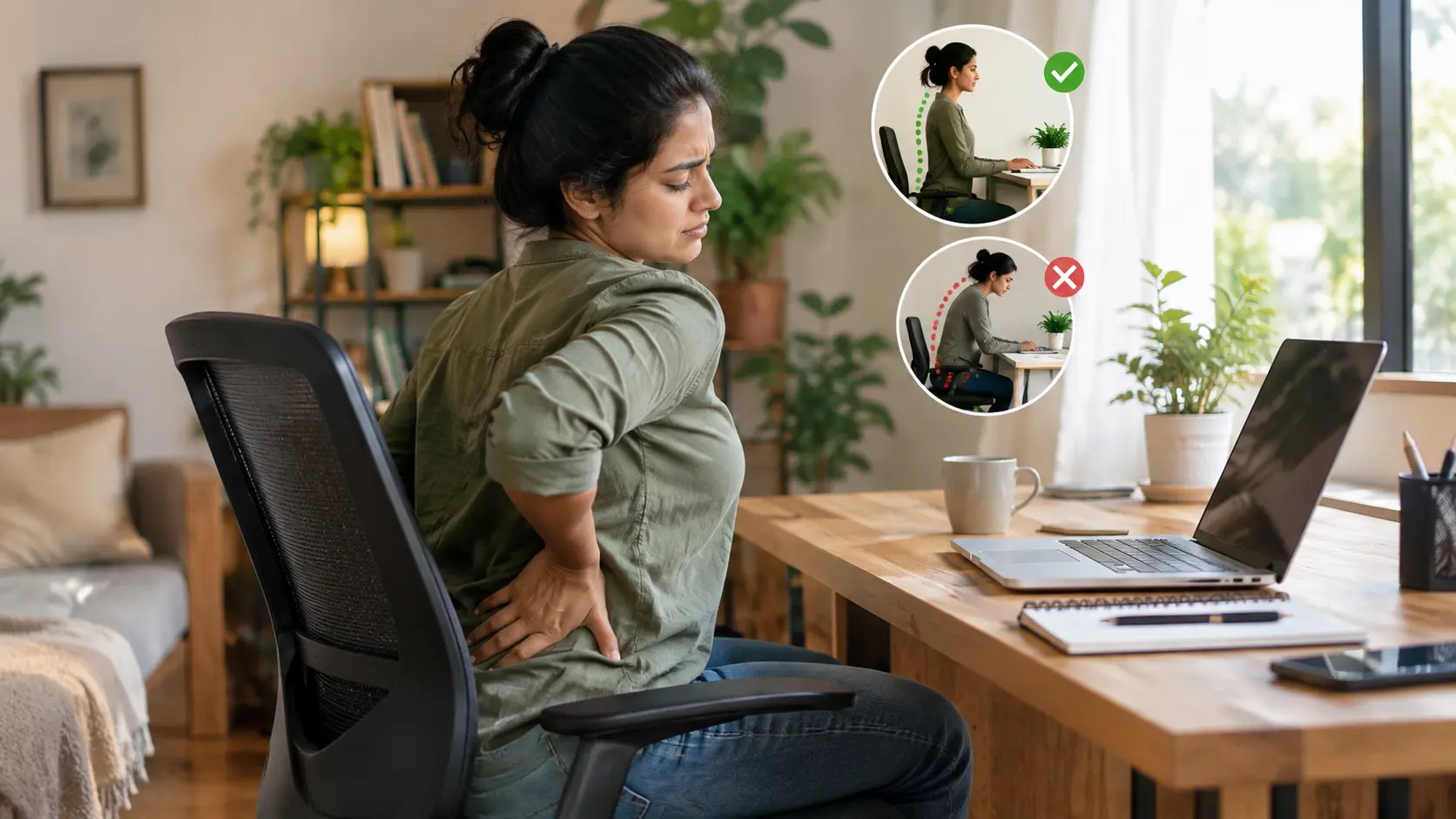
Remote work has changed the way most of us spend our day, and along with it, the way our spine feels by evening. What started as a temporary arrangement for many professionals during the pandemic has now become a permanent routine, and the strain on the back has become permanent too. If you have noticed a dull ache creeping into your lower back or a stiffness in your neck by the afternoon, you are far from alone.
Multiple observational studies tracking work from home back pain found that neck pain affected between 20 and 77 percent of remote workers, while low back pain ranged from nearly 20 to 74 percent depending on the setup and hours logged. That is a wide and worrying range, and it points to one thing clearly: the home environment is often far less spine friendly than a proper office. This guide walks through why this happens and, more importantly, how to prevent back pain while working from home with practical, evidence backed changes you can start today.
Home setups were never designed with eight hours of desk work in mind. A dining chair, a laptop balanced on a lap, or a makeshift desk in the corner of a bedroom all seem fine for an hour, but the damage builds up slowly.
Interestingly, one study found that lower back pain worsened more sharply in work from home ergonomics setups than in office environments, even though most employees said they preferred remote work overall. This confirms that the problem is not remote work itself, but the missing structure around it.
A proper ergonomic home office setup is the single biggest factor in reducing daily strain, and it does not need to be expensive to be effective.
If a dedicated office chair is not available, a rolled towel or cushion behind the lower back can substitute temporarily while you plan for a proper ergonomic chair for back pain relief.
Knowing how to sit correctly while working matters just as much as the furniture itself, since even the best chair cannot fix a slouched position.
Alternating between sitting and standing throughout the day is one of the most effective ways to protect the spine. The standing desk benefits documented in biomechanical studies include reduced disc pressure, lower back muscle activity and less strain on the ischial region compared to sitting continuously through the day.
Movement is medicine for a desk bound spine. Simple back stretches for office workers performed consistently through the day can meaningfully reduce discomfort, and structured break routines built around hip and lumbar extension have shown measurable improvement in low back pain scores during clinical trials.
Beyond furniture and stretches, daily habits shape long term spinal health just as much as any single ergonomic fix.
Following these orthopedic tips for back pain consistently, rather than occasionally, is what separates people who adapt well to remote work from those who develop chronic discomfort.
Home remedies, posture correction and stretching resolve the majority of mild to moderate discomfort. However, pain that lingers beyond two to three weeks, radiates down the leg, or is accompanied by numbness or weakness needs proper medical evaluation rather than more home adjustments. Ignoring these warning signs can allow a manageable issue to progress into a chronic spinal condition.
If your back pain is not improving despite ergonomic changes and consistent exercise, it is time to consult a specialist rather than self diagnose. The orthopedic and spine care team at SP Fort Hospital regularly evaluates professionals dealing with persistent work related back and neck pain, offering proper diagnosis, physiotherapy guidance and treatment plans tailored to your lifestyle.
Back pain from sitting all day is not an inevitable part of remote work, it is largely a result of missing structure, poor posture and long periods without movement. By setting up an ergonomic workspace, sitting correctly, alternating between sitting and standing, and building stretching and movement into your daily routine, you can protect your spine for the long run while still enjoying the flexibility that working from home offers.
If your lower back pain while working from home has become persistent despite these changes, do not wait for it to worsen. Book a consultation with the spine and orthopedic specialists at SP Fort Hospital today and get a proper assessment tailored to your posture, lifestyle and daily work routine.
1. Why does working from home cause more back pain than working in an office?
Home setups often lack adjustable chairs, proper desk height and monitor positioning, forcing the body into poor postures for extended hours without the built in breaks that a traditional office often provides.
2. How many hours of sitting is considered harmful for the back?
Research shows that slumped, unsupported postures begin appearing within twenty minutes of continuous sitting, which is why position changes every 30 minutes are recommended regardless of total daily hours.
3. Can a standing desk alone fix back pain?
A standing desk helps reduce disc pressure and muscle strain compared to constant sitting, but it works best when combined with good posture, regular movement and strengthening exercises rather than used alone.
4. What is the fastest way to relieve back pain from sitting all day?
Gentle movement such as a standing backbend, a short walk or a hip flexor stretch typically brings faster relief than staying still, since movement restores blood flow and reduces stiffness.
5. When should I see a doctor for work from home back pain?
If pain persists beyond two to three weeks, worsens despite posture and ergonomic changes, or spreads down the leg with numbness or tingling, it is important to consult a spine specialist promptly.

